

Directory
Sponsored

 13 years, 8 months ago


 Facebook
 Twitter
 Google+
 LinkedIn

|
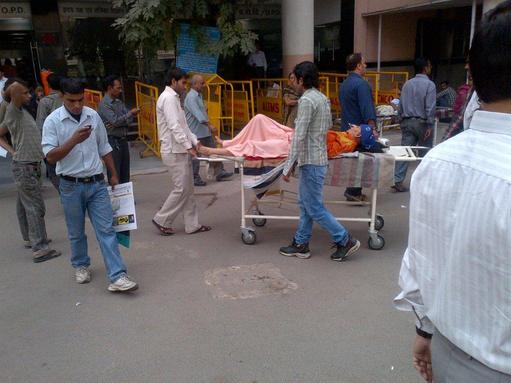
How do you develop a patient centred healthcare system that serves vast numbers of transient poor people? India has an answer: Rashtriya Swasthya Bima Yojna (RSBY), which has won plaudits from the World Bank and the United Nations as one of the world's best health insurance schemes. RSBY combines state-of-the-art technology and incentive structures. It is paperless, does not use cash and provides affordable health insurance to millions of people. The overwhelming majority of who, are illiterate, transient people living below the poverty line. According to Dr Anshuman Kumar, Chief Oncosurgeon, Dharamshila Cancer Hospital and Research Centre in New Delhi, “Since its launch, four years ago, Rashtriya Swasthya Bima Yojna covers some 40 million people many of whom have benefitted from in-patient hospital procedures. The scheme has been so successful that the Government is planning to extend it to India’s old age and disabled pension schemes”. In developing countries, poverty and ill health are synonymous. Billions of poor people lack access to healthcare while being exposed to multiple health risks. This, not only increases the health consequences for those individuals and their families, but has both a direct and indirect effect on economies. Widespread poverty as well as ill health decreases productivity; lowers competiveness, increases fiscal pressure, creates further poverty and promotes greater inequity. India is a rising global economic superpower with a GDP roughly equivalent to 3% of the world economy, but has a third of the world’s poor. In 2011 the World Bank reported that 33% of India’s population fell below the international poverty line of US$1.25 per day and 69% live on less than US$2 per day. Although India is on track to meet its poverty reduction goal set by the United Nations in 2000; by 2015, 53 million people are expected to be still living in extreme poverty and 24% of India’s population of 1.2 billion is expected to be still living on less than US$1.25 per day. India is not unique in being a rich country with poor people. This is a phenomenon shared by several developing countries. For example, Mozambique, rich in gas, oil and minerals, is a fast growing rich country with poor people. Ninety nine per cent of Mozambicans are small scale farmers and a large proportion of these are poor. Mega projects, such as the planned US$6 billion investment by Vale, a Brazilian company, to create the world’s largest coal mine in Mozambique, do not generate large numbers of jobs, do not foster entrepreneurship and because of the tax incentives they receive, only make modest contributions to exchequers. African rich countries with poor people might do well to look to India’s RSBY health insurance scheme. Like many fast growing developing economies, India needs to fuel economic growth by reducing the percentage of poor and reaping the benefit from her working age population. India’s declining fertility and mortality rates have resulted in a population bulge of about 0.45 billion people between the ages of 15 and 25 years. This gives India the world’s largest share of working age population: a demographic dividend. But, how does India finance and provide healthcare for this vast group, a third of which are illiterate, transient and live below the poverty line? The answer is RSBY. RSBY employs cost effective, scalable technologies to help satisfy the health needs of a significant proportion of India’s poor. Enrolment of families into the scheme, biometric smart card generation, pre-authorization of admissions, as well as claim submission and approval, all occur electronically. Beneficiaries can use their smartcards in any empanelled hospital across India and therefore travel is no barrier to receiving healthcare. Patient data are transferred electronically between empanelled hospitals and insurance companies and claims are settled automatically. The scheme lowers costs, increases efficiency and reduces fraud. RSBY is run on shared financial contributions by both central and state governments. Seventy five per cent of the premium is borne by the central government and the rest by state governments and all parties involved benefit. The Indian Government benefits by providing cost effective healthcare to millions of poor people. This helps to reduce poverty and increase productivity. Insurers benefit because they are paid for each household they recruit. Empanelled hospitals benefit as they are incentivised to provide treatment to a large number of participants. Non government agencies benefit because they are paid to find and recruit households. Poor people benefit because the scheme transforms them into customers and provides them access to healthcare, which they never had before. |
|
Beneficiaries receive hospitalization coverage up to US$560 per year for some 700 in-patient procedures. Central and state governments pay the premium to insurers who are selected by state governments on the basis of competitive bidding. Insurers monitor participating hospitals, which reduces unnecessary procedures and fraud. Beneficiaries need only pay about US$0.75 as an annual registration fee. The scheme has no age limit, it covers pre-existing ailments, provides surgical and health expenses for five family members and covers pre and post hospitalization charges and transport expenses of US$2 per visit. RSBY’s has its challenges. There are human rights issues associated with biometric identification and the digitalisation and use of confidential personnel data. There have been delays in the issuance of smart cards. Some people have complained that they do not know how and where to utilise the scheme. Some hospital personnel have not been appropriately trained to use card-reading technology and there have been delays in the reimbursement of treatment expenses to hospitals and some hospitals stopped accepting patients under the scheme. On 12th October 2012, the Times of India reported: “Privatehospitals are reportedly milking Rashtriya Swasthya Bima Yojnaby carrying out fictitious or unnecessary surgical procedures on poor patients covered under the scheme. . . . . . When payers do not have a tight supervisory mechanism or do not care since the government is footing the bill, ultimately, hospitals get away with murder. The right thing to do is to align incentives, not put more constables on the hospital watch.” India is not known for its good governance, especially among public officials, but challenges encountered by RSBY should not detract from the importance of this innovative and ambitious scheme.
Healthcare systems throughout the world are challenged by rising costs, poor quality of care and inaccessibility to healthcare. Healthcare systems will become unsustainable if they continue to focus on diseases rather than patients. Patient-centred care has become one of the principal goals of health advocacy. RSBY, based on digital technologies, makes patients the primary focus of the system and individuals are helped to self manage their conditions. It is not surprising that last summer a delegation of policy makers from Germany, Europe’s industrial powerhouse, spent time in India learning more about RSBY with the intent of changing Germany’s social security systems. Policy makers from rich countries with poor people might think of doing something similar. |

Is it possible for doctors to provide care without being perceived as taking sides during conflicts? This question is posed more and more as attacks on health workers in war zones increase.
In January 2012, Khalil Rashid Dale, a doctor travelling in a clearly marked International Committee of the Red Cross (ICRC) vehicle to Quetta, the capital of Baluchistan province in Pakistan, was abducted by unknown armed men. Some four months later the doctor’s beheaded body was found in an orchard. Also in January two Médicins Sans Frontières (MSF) health workers were killed in Mogadishu, Somalia. The consequences of such attacks are disproportionate in their impact. A consequence of the Somalia killings led to the MSF closing two 120-bed medical facilities in Mogadishu, which served a population of some 200,000 and which over the previous year, had treated close to 12,000 malnourished children and provided measles’ vaccinations and treatment to another 68,000 patients.
In 2011 Robin Coupland, a former trauma surgeon, now a medical adviser with the ICRC, co-authored Health Care in Danger, a study, which describes how and why health workers get caught in the cross fire and what the consequences are when they do. The study was used to launch an ICRC campaign to raise awareness of the problem and make a difference to health workers on the ground.
For some people however, it is impossible for doctors to provide care without being perceived as taking sides during conflicts. Some argue that as the quantum of humanitarian aid has increased over the past decade, so humanitarian aid agencies have been compelled to rely on sub-contracting in actual conflict areas. This, it is suggested, provides a breeding ground for aid corruption to finance nefarious elites and to further destabilize conflict areas, implying that healthcare activities of humanitarian organisations in war-torn regions have become increasingly politicised. Even agencies that make considerable efforts to disassociate themselves from political actors and project an image of neutrality have not been immune from attack.
Do warring factions perceive health workers as supporting the enemy and therefore see them as legitimate targets? Or are health workers targeted because they represent an opportunity to amplify messages to a global audience? It is likely both are true, but the impact on society as a result of removing vital healthcare in war zones, due to these attacks, can have devastating consequences.

We have always been and always will be married to our own health. In the future, however, we will be taking greater responsibility for it. The British government is encouraging more people to use modern technology to increase control over their health. Under the new UK NHS Mandate launched on 14th November 2012 by Health Secretary Jeremy Hunt, patients will be encouraged to give feedback on the quality of their care, so others can then choose between hospitals. By 2015, modern communications technology is expected to play a substantially bigger role in the UK’s healthcare system and a significant proportion of patients will be booking GP appointments online and ordering repeat prescriptions over the internet. Launching The Mandate, Hunt said: “Never in its long history has the NHS faced such rapid change in our healthcare needs, from caring for an older population, to managing the cost of better treatments, to seizing the opportunities of new technology.”
The UK Mandate marks the beginnings of a redefinition of health and healthcare away from its focus on disease towards a focus on patients and individual wellbeing. A significant driver of this shift is the rising cost of care. In January 2012, Standards & Poors published a report suggesting that the creditworthiness of leading developed countries would be in jeopardy if they did not stem the escalating cost of healthcare. Highlighting the US, Germany, the UK and France, it said: “We project that healthcare costs for a typical advanced economy will stand at 11.1 per cent of GDP by 2050, up from 6.3 per cent of GDP in 2010.”
In the US, which is richer than other countries, the situation is particularly bad and Americans are willing to spend more on healthcare. In 2000 US healthcare was 13.8% of GDP, by 2010 it had increased to 19.8%. Over the past 40 years, healthcare costs in the US have been rising significantly faster than the overall economy or personal incomes, a trend that cannot continue forever. Americans pay hospitals and doctors more than most patients do in other rich countries. US insurance incentives entice doctors and patients to use expensive medical services more than is often warranted. Americans rely more on costly specialists, who tend to overuse advanced imaging technologies and resort to costly surgical or medical procedures a lot more than doctors do in other countries. This suggests that wealth as well as aging is a significant driver of health costs.
As advanced industrial economies become wealthier, their healthcare spends converge with that of the US. According to Stuart Fletcher, the CEO of BUPA, British patients are increasingly bi-passing health insurance companies and paying private hospitals and specialists directly and specialist fees are continuing to rise. Rising fees and the relative lack of competition and transparency among private hospitals slows the rate that people take up private health insurance. In the medium-term this, says Fletcher, will create an “affordability crunch”. BUPA’s European and US business saw half year profits for Europe and North America fall by 22%. BUPA has responded to the changing market conditions by offering patients more power and greater choice. BUPA is trialling a new scheme where it acts as a broker for patients, helping them negotiate the best price and quality of treatment on 70 common conditions.
This is not only an issue for health insurers. In most countries healthcare expenditure is rising twice as fast as economic growth. This suggests that unless something is done to change the situation, healthcare systems are economically unsustainable and this will inevitably lead to healthcare programmes being either reduced or cut. Healthcare costs are set to escalate further because of the worldwide pandemic of chronic non-communicable diseases: cancer, diabetes, heart and respiratory conditions. Margaret Chan, the Director General of the World Health Organization views chronic non communicable diseases as “The biggest threat to the 21st Century”. Today, 60% of all deaths are due to these diseases: twice the number due to communicable diseases. However, this is not only about mortality, it is also about morbidity and dependency and the economic impact on both treatment and lost productivity, which has been estimated to be nearly US$50 trillion over the past 20 years.
Richard Saltman, Professor of Public Health at Emory University in the US, said a key theme as governments seek to curtail healthcare costs, would be “rethinking the balance between collective and individual responsibility.” This raises the prospect in many countries of people being expected to take greater charge of their own health and this is what the new UK NHS Mandate is nudging towards.
Patient focused healthcare means a shift away from reactive medicine comprised of diagnosis and treatment. Reactive healthcare systems primarily treat patients after the onset of disease; incur significant costs and usually do not restore patients to perfect health. To be sustainable, healthcare systems will have to go further than the new UK NHS Mandate. They will have to be redefined away from prevention and treatment of illness to one of promoting well-being. This places a greater importance on mental illness and on complementary and traditional medicine and shifts the emphasis away from hospitals and clinics towards less traditional places including the home where individuals will be better positioned to take control of their own health.