|
A third scenario places the disruptors in charge. Should frontier players like Neuralink, Synchron, or Precision Neuroscience deliver clinical breakthroughs and regulatory wins, they could trigger a “Tesla effect”: patients and hospitals would demand access, incumbents would be forced into costly licensing or acquisitions, and the balance of power would tilt toward venture-backed challengers writing the new rules.
Finally, the field could drift toward stalemate and gradualism. In this world, no ecosystem achieves dominance. Hospitals continue stitching together fragmented tools, surgeons wrestle with complexity, and innovation progresses incrementally. Consolidation occurs in piecemeal fashion, without lowering costs or producing transformative outcomes.
The Coming Consolidation
Despite these divergent possibilities, one dynamic is inescapable: the neurosurgical market is primed for consolidation. Medtronic has already built a defensible moat through scale and integration, positioning itself as the natural consolidator. To avoid marginalisation, Stryker and J&J will need to accelerate acquisitions, while Zeiss and Leica must evolve beyond optical supremacy if they are to remain relevant. Meanwhile, mid-sized players like Brainlab, Synaptive, and Monteris are unlikely to remain independent, and frontier start-ups may yet define the next wave of neuro-innovation.
Ultimately, which scenario materialises will depend on two forces: (i) the speed with which neuromodulation and BCI technologies gain adoption, and (ii) the aggressiveness of incumbents in acquiring innovation. The next five years will not just decide a winner - they will determine the long-term architecture of neurosurgical dominance for decades to come.
The Next Five Years: What Leaders Should Expect
The coming half-decade will be transformative for neurosurgery. Once defined by manual craftsmanship and mechanical tools, the discipline is entering an era where therapies, technologies, and data streams converge into integrated ecosystems. The shift will be rapid: regulatory approvals are broadening, digital tools are becoming indispensable, and business models are moving from hardware sales to platform monetisation. These dynamics are already reshaping the neurosurgical landscape in ways that demand both strategic foresight and operational agility. Over the next five years, leaders must prepare for technological disruption and a redefinition of care delivery, as five forces emerge as bellwethers of this transformation.
The first is the rise of aDBS. Long applied in movement disorders, aDBS is now expanding into psychiatric and epileptic indications, setting the stage for its adoption as a front-line therapy across multiple disease areas. By 2030, closed-loop systems capable of continuous biomarker monitoring, personalised stimulation, and cloud-based analytics will redefine what “standard of care” means in neuromodulation.
In parallel, minimally invasive BCIs are beginning to scale beyond research labs into real-world practice. With endovascular and thin-film technologies lowering procedural burden and complication rates, BCIs will first transform stroke rehabilitation and spinal cord injury before moving into chronic neurodegenerative conditions. Their usability - and compatibility with existing hospital infrastructure - will accelerate adoption beyond niche applications.
Another disruptive front is LITT, which is moving rapidly toward global standardisation. AI-guided targeting, enhanced intraoperative imaging, and consistent safety profiles are pushing LITT into routine use for brain tumours, epilepsy, and radiation necrosis. For hospitals, the technology promises reproducibility and efficiency; for industry, it offers a scalable consumables-driven model that aligns with recurring revenue streams.
Alongside these therapies, robotics are shifting from optional differentiators to essential infrastructure. Precision neurosurgery will increasingly depend on robotic navigation for accuracy, reproducibility, and workflow integration that exceed human capacity. As open-skull procedures decline, robotic systems will anchor the surgical suite, enabling minimally invasive trajectories, multimodal integration, and, ultimately, semi-autonomous execution of defined tasks.
Finally, the rise of cloud services will reshape neurosurgery’s economic model. Devices and implants will no longer be static tools but nodes in a continuous, data-driven ecosystem. Remote updates, adaptive programming, and predictive analytics will unlock ongoing therapeutic optimisation for patients while creating durable, high-margin revenue streams and customer lock-in for companies.
Risks and Barriers to Watch
Neurosurgical innovation is advancing rapidly, but its trajectory is far from assured. Widespread adoption will depend not only on technological maturity but also on systemic enablers that remain uncertain.
Reimbursement is the first hurdle. Payers will demand robust evidence that interventions such as adaptive DBS or BCIs deliver both clinical benefit and long-term cost-effectiveness. Without clear proof of value, approval may stall, delaying mainstream access.
Clinician readiness is the second. As neurosurgery becomes more data-driven and robotics-enabled, uptake will hinge on training, workflow redesign, and trust in new modalities. Even the most advanced platforms risk underuse if surgeons lack confidence in them.
Data governance adds another layer of complexity. Continuous streams from implants and cloud platforms raise inevitable questions of ownership, privacy, and cybersecurity. Regulatory frameworks often lag technological capability, creating uncertainty and opening the door to institutional or public resistance.
Infrastructure remains a practical barrier. Cloud-enabled neurosurgery requires reliable connectivity, secure IT integration, and capital-intensive robotics - conditions far from universal, particularly outside elite centres. Finally, regulatory pathways are fragmented: while some jurisdictions accelerate approvals, others remain cautious, exposing innovators to uneven market access and lost opportunity.
From Tools to Ecosystems
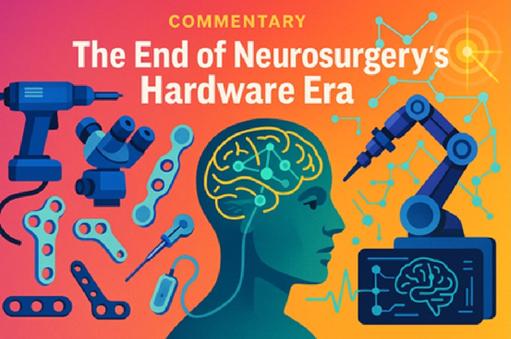
By 2030, neurosurgery will no longer resemble carpentry of the skull; it will look more like precision engineering of brain–machine ecosystems. Competitive advantage will shift from selling instruments - scalpels, drills, craniotomy kits, microscopes - to orchestrating platforms, harnessing data, and managing the therapeutic journey from diagnosis through decades of care.
Yet this transition will not be seamless. The barriers outlined - reimbursement inertia, clinician adaptation, data governance, infrastructure gaps, and regulatory fragmentation - will determine whether breakthrough technologies become mainstream standards or remain niche.
Leaders who master both dimensions - delivering technological breakthroughs and navigating adoption barriers - will not just shape neurosurgery over the next five years. They will establish the platforms that define the field for the next five decades.
Takeaways
The neurosurgical market is undergoing a once-in-a-generation pivot. For healthcare leaders, the implications are significant: shorter hospital stays, fewer complications, and new service lines - from minimally invasive epilepsy surgery to BCI-driven rehabilitation. The economics of care will tilt toward precision interventions that lower overall costs while raising standards of outcomes. For device executives, the message is starker: growth is no longer tethered to mechanical tools. The future belongs to implants, robotics, navigation, and cloud ecosystems - and the companies bold enough to seize them through R&D, acquisitions, or partnerships will own the high-margin growth of the next decade. This is not evolution by degrees. It is the dawn of a new neurosurgical era.
|


 5 months, 3 weeks ago


 Facebook
 Twitter
 Google+
 LinkedIn