Tag

Tagged: adaptive deep brain stimulation

Sponsored
  • Neurosurgery is shifting from tools to platforms - implants, robotics, and cloud ecosystems
  • Adaptive deep brain stimulation (aDBS), minimally invasive brain-computer interfaces (BCIs), and laser interstitial thermal therapy (LITT) are already commercial
  • Care economics: shorter stays, fewer complications, and new high-value service lines
  • Legacy hardware is declining; growth is migrating to digital ecosystems
  • Winners: high-margin, recurring revenues; laggards: market decline
 
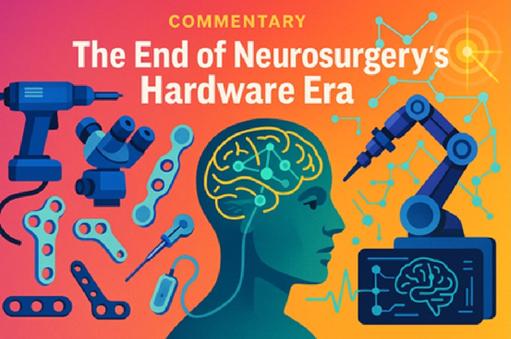
The End of Neurosurgery’s Hardware Era

For more than three decades, neurosurgical device manufacturers have built a thriving, indispensable market - creating the tools that make life-saving surgery possible. Stereotactic frames, operating microscopes, drills, fixation systems, and navigation platforms became essential, forming the backbone of modern neurosurgery and delivering consistent growth for those who mastered this playbook. Many of today’s executives have enjoyed stable careers supported by a proven formula of precision hardware, surgeon loyalty, and recurring demand.

But a threshold is now being crossed that is as disruptive as the advent of the microscope or stereotactic surgery. For the first time, adaptive deep brain stimulation (aDBS), minimally invasive brain-computer interfaces (BCIs), and laser interstitial thermal therapy (LITT) are converging - shifting neurosurgery from a field defined by open craniotomies and durable hardware toward one shaped by precision implants, software-driven modulation, and MRI-guided, minimally invasive interventions. These technologies are clinically validated, regulatory-cleared, and already entering operating rooms. The implications for traditional manufacturers are significant. The battlefield is shifting:
  • From mechanical instruments to intelligent, adaptive systems.
  • From one-off device sales to recurring data-driven service models.
  • From hardware silos to integrated digital ecosystems.
Executives who assume this transition is beyond their horizon, risk misjudging its speed and impact. Neurosurgery in the 2030s will not be dominated by traditional toolsets. It will be shaped by platforms that combine robotics, closed-loop neuromodulation, and minimally invasive navigation - technologies that are rewriting value creation in the operating room.

The leaders who act now - by repositioning portfolios, investing in neuromodulation and precision-guided therapies, and embracing digital-first business models - will define the next era of neurosurgical leadership. Those who dismiss these signals as distant or incremental will watch their once-unshakable market positions erode.

 
In this Commentary

This Commentary contends that neurosurgery is experiencing a renaissance. After decades of steady growth built on drills, microscopes, and fixation systems, the field is pivoting to precision implants, robotics, and digital ecosystems. Adaptive brain stimulation, minimally invasive brain-computer interfaces, and laser therapies are not distant bets - they are already reshaping practice. For device leaders, the playbook is being rewritten; growth will flow not from hardware, but from platforms, data, and connectivity that redefine the economics of care.
 
Adaptive Deep Brain Stimulation

The coming five years will mark not just an evolution in neurosurgery, but a renaissance - one that will redefine the boundaries of science, medicine, and industry. This is a moment that demands vision, urgency, and strategic bets. Let us take a closer look at the three breakthroughs poised to reshape the field: adaptive deep brain stimulation (aDBS), brain-computer interfaces (BCIs), and laser interstitial thermal therapy (LITT).

For decades, deep brain stimulation (DBS) has been a lifeline for patients with Parkinson’s disease. Yet traditional DBS has always been blunt: constant stimulation, regardless of the patient’s state. Adaptive DBS changes this.

This closed-loop technology continuously tracks neural activity and automatically adjusts stimulation to match the brain’s needs in real time. In a 2024 Nature Medicine study from UCSF, aDBS - an “intelligent brain pacemaker” that responds dynamically to patients’ neural signals - reduced Parkinson’s motor symptoms by ~50% versus conventional DBS in a blinded, randomised feasibility trial. Benefits extended beyond tremor control: patients also reported better sleep and improvements in non-motor function, suggesting broader systemic impact.

The pace of commercialisation in neurostimulation is accelerating. In 2023, Medtronic obtained CE Marking for its Percept™ RC neurostimulator, advancing the field of deep brain stimulation. Building on this milestone, the company achieved a breakthrough in early 2025, securing both CE Marking and FDA approval for BrainSense™ - the world’s first aDBS system designed for people with Parkinson’s disease.

Looking forward, aDBS will not remain confined to Parkinson’s. Its algorithmic adaptability is already being tested in epilepsy, dystonia, Tourette’s, and psychiatric conditions such as depression and obsessive-compulsive disorder. This is more than an incremental improvement - it is the beginning of personalised neuromodulation at scale.

For the MedTech industry, the consequences are huge: software, AI algorithms, and data services now become as critical as electrodes and leads. Whoever owns the cloud, the analytics, and the continuous therapy updates will own the patient relationship long after implantation.
The future of global healthcare is taking shape in Riyadh. In this episode of HealthPadTalks, Saudi Arabia: The MedTech Powerhouse we explore how Saudi Arabia’s Vision 2030 - and its bold investments in AI, digital health, and infrastructure - are positioning the Kingdom as a MedTech hub.
Minimally Invasive BCIs - Interfaces Without Craniotomy

Brain-computer interfaces (BCIs) have long carried the allure of breakthrough potential but historically stumbled on the barrier of invasiveness. Full craniotomies confined them to high-risk experimental contexts, limiting adoption. Precision neuroscience is now dismantling that constraint.

The Layer 7 Cortical Interface exemplifies this shift. It is an ultra-thin, flexible electrode sheet introduced through a pinhole opening in the skull - no craniotomy, no destructive penetration. With more than 1,000 electrodes, it achieves unprecedented cortical resolution while remaining fully reversible. By 2025, the platform had received FDA clearance and was implanted in >30 patients - evidence that BCIs have advanced beyond speculative prototypes into clinical reality.

These devices open minimally invasive windows into the cortex, enabling mapping, targeted stimulation, and continuous monitoring of brain activity. Applications extend beyond communication restoration in paralysis: early deployments point toward transformative roles in stroke rehabilitation, spinal cord injury recovery, epilepsy surveillance, and the management of progressive neurodegenerative conditions.

For industry, the opportunity is equally disruptive. BCIs represent not just new surgical tools but a reshaping of the neurosurgical armamentarium. Traditional mechanical instruments - chisels, retractors, drills - will gradually yield to precision micro-interfaces that link neural circuits to digital systems. This transition will reshape business models as well. Instead of one-time instrument sales, manufacturers will generate durable value through recurring engagement: embedding patients in long-term digital ecosystems supported by software, remote monitoring, over-the-air updates, and cloud-based analytics. In effect, BCIs transform neurosurgery from a hardware transaction into a platform business.
  
Laser interstitial thermal therapy (LITT) - Lasers Replacing the Scalpel

For decades, neurosurgery for conditions such as epilepsy or brain tumours relied on craniotomies - major operations associated with long hospital stays, significant morbidity, and extended rehabilitation. Laser interstitial thermal therapy (LITT) is rewriting this paradigm. By introducing a laser fibre through a small skull opening and ablating pathological tissue under real-time MRI guidance, surgeons can now achieve outcomes with greater precision, lower risk, and shorter recovery times.

What was once considered an experimental approach has now been validated by major health systems, with the UK’s NHS formally incorporating LITT into pathways for drug-resistant epilepsy. Increasingly, the technology is being applied not only to epilepsy and certain tumours but to a broader set of neurosurgical indications. As AI-driven targeting and advanced intraoperative imaging mature, LITT is evolving into a modality whose precision rivals - and in many scenarios surpasses - open surgery, while reducing morbidity, length of stay, and downstream rehabilitation costs.
For leadership teams, the strategic importance lies in how LITT is redefining the competitive landscape of neurosurgical technology. The centre of gravity is shifting away from instruments of open surgery - microscopes, retractors, and craniotomy sets - toward MRI-compatible laser systems, robotic guidance platforms, and software ecosystems capable of delivering minimally invasive precision at scale. The new frontier is not how extensively the skull can be opened, but how effectively pathology can be targeted and eradicated from within, with minimal disruption to the patient.
You might also like to listen to:

Rewiring Neurosurgery: The 2040 Frontier

In this reframed battlefield, the companies that succeed will be those that align with the momentum toward precision, minimally invasive neurosurgery - harnessing lasers, robotics, and AI as the next gold standard of care.
 
Why These Breakthroughs Matter

The common thread across aDBS, BCIs, and LITT is the rise of minimally invasive, image-guided, precision neurosurgery - a shift that is transformative. For boards and investors, these breakthroughs represent not just clinical progress, but strategic inflection points with direct implications for adoption, scale, and market leadership.
  • Adaptive DBS (aDBS): By proving that real-time, personalised brain stimulation is both technically feasible and clinically validated, aDBS shifts neuromodulation from experimental to commercially viable. This positions adopters to lead in a fast-maturing market where differentiation will rest on personalisation, data integration, and clinical outcomes.
  • Minimally invasive BCIs: Eliminating the need for a craniotomy reduces surgical risk, unlocking a pathway to large-scale patient adoption. This lowers barriers for payers and regulators, accelerates trial recruitment, and creates a first-mover advantage for platforms designed with scalability in mind.
  • LITT: By replacing open resection with targeted laser energy, LITT reduces hospital stays and recovery times. Beyond clinical benefit, this is a health economics play: hospitals gain throughput efficiency, payers reduce cost burden, and innovators position themselves as partners in value-based care.
Individually, these technologies advance their respective niches. Collectively, they mark the convergence of robotics, imaging, implantable devices, and AI into a single, interoperable surgical ecosystem. This integration is where durable value will be created: it is not about a single tool but about controlling the platform that redefines the neurosurgical workflow.

For investors and board leaders, the opportunity is clear. As neurosurgeons evolve from manual operators to orchestrators of a data-driven ecosystem, the companies that enable and integrate these capabilities will capture strategic advantage. These breakthroughs are not just clinical milestones - they are market access accelerators, adoption enablers, and differentiators in a sector poised for structural transformation.

 
The Impact on Conventional Neurosurgical Devices

The transformation in neurosurgery is reshaping revenue pools and balance sheets across the sector. Companies anchored to traditional hardware - craniotomy sets, steel retractors, bone plates, optical microscopes - are watching their once-core products become legacy line items. What is at stake is not incremental erosion but a structural reallocation of value.
  • Access tools are shrinking: Wide craniotomies are being replaced by burr holes, ports, and narrow access pathways. The capital-intensive inventories of craniotomes and retractors - once dependable revenue drivers - are losing relevance as minimally invasive becomes the standard of care.
  • Materials are evolving: Stainless steel, the defining material of 20th-century neurosurgery, is being displaced by MRI-compatible polymers, fibre-optic delivery systems, and precision-engineered devices that can coexist with real-time imaging. MRI-safety has shifted from differentiator to baseline expectation, raising the bar for incumbents.
  • Robotics and navigation are becoming core infrastructure: What was once an “adjunct” has become a workflow gatekeeper. Freehand stereotaxy cannot deliver the precision demanded by aDBS, BCIs, or LITT. Robotic arms and navigation systems are moving from optional to indispensable, creating high barriers to entry for late adopters.
  • Microscopes are receding: Once the iconic tool of the neurosurgeon, the microscope is now peripheral in minimally invasive workflows. Imaging, robotics, and automation - not magnified optics - are defining the surgeon’s role as orchestrator, not manual craftsman.
Most importantly, the economic centre of gravity is shifting to neuro-implantation. The electrode, the lead, the neural interface - these are no longer static implants, but dynamic, cloud-connected platforms integrating hardware, software, and service. Unlike consumables, they generate recurring revenue streams, data-driven refinements, and sticky ecosystems.

For boards and investors, the signal is clear: the industry’s economic backbone is being re-engineered. Legacy inventories - craniotomy sets, retractors, microscopes - are declining toward commodity status. Growth and differentiation will accrue to those who control integrated platforms in robotics, navigation, and neuromodulation ecosystems.

The competitive landscape is unforgiving. Companies burdened by balance sheets tied to yesterday’s inventory, FDA remediation costs, or debt-heavy acquisition strategies are at risk of being left behind. The market has already shifted its centre of value. The strategic question is no longer if neurosurgery will transform, but who will own the platforms that define its future - and who will be consolidated out of existence.

 
Strategic Imperatives for Legacy Device Companies

For companies still anchored in open-surgery hardware, the inflection point is no longer looming - it has arrived. Regulatory remediation, mounting debt loads, and urgent demands to patch quality systems are colliding with the rise of digital-native competitors. Many leaders, steeped in yesterday’s playbook, are understandably cautious, prioritising near-term firefighting over long-term repositioning. But history is unforgiving: in moments of industry transition, those who hesitate are left behind.

The companies that endure will be those that energise leadership, reframe today’s constraints as catalysts, and build the future while managing the present. The laggards, by contrast, will remain trapped in shrinking niches, gradually displaced by more agile entrants. Against this backdrop, certain imperatives stand out as a pragmatic roadmap for reclaiming value and relevance in the next five years.
You might also like:

Redefining Value in Neurosurgery

The first step is to reposition as platform companies. The future of neurosurgery will be built on integrated ecosystems that unite robotics, navigation, implants, cloud analytics, and perioperative services into a whole. In this world, standalone hardware is reduced to commodity status. Every device must instead become a node in a defensible network, anchoring a platform rather than standing alone.
At the same time, incumbents must enter neuromodulation and interfaces - fast. Start-ups are redrawing the competitive frontier with adaptive DBS, cortical implants, and brain-computer interfaces. Waiting on the sidelines is no longer an option; the quickest route in is through partnerships and targeted acquisitions. These are the growth engines of the decade and sitting them out means ceding the category.

Equally critical is the mandate to double down on robotics and imaging. Precision is now the defining currency of neurosurgery. Sub-millimetre robotic systems, AI-driven trajectory planning, and real-time intraoperative imaging will shape the next standard of care. Companies that underinvest here risk erosion of value and, within a few years, irrelevance.

That said, leaders must also protect the open-surgery franchise. Complex resections and vascular procedures are not vanishing; instead, they are concentrating into centres of excellence. By arming these centres with next-generation microscopes, augmented reality (AR) overlays, and smart retractors, companies can defend margins while building bridges into the robotic era.

In parallel, there is a need to shift toward recurring revenue models. One-off hardware sales are volatile and low margin. Ecosystems and implants, by contrast, unlock subscriptions, cloud-based monitoring, and “neurosurgery-as-a-service.” This pivot from transactions to predictable annuities raises margins and stabilises cash flow - essential for debt-burdened balance sheets.

Another decisive battleground will be owning training and workflow. Surgeons use what they are trained on. Companies that invest in immersive VR/AR labs, certification pipelines, and integrated curricula will cultivate generational loyalty. Training should be seen not as a cost centre but as moats a company can build.

Finally, success will depend on tailoring global market strategy. While high-income centres adopt premium robotic suites, emerging markets will remain reliant on open-surgery approaches. Defending share requires tiered product lines: flagship systems for advanced hospitals, and hybrid craniotomy kits for developing regions. This dual approach sustains near-term revenues while planting seeds for future adoption.

The guiding principle is pivot from cutting to connecting, from hardware to ecosystems, from single-use transactions to service-driven platforms. Companies cannot afford to delay until “after remediation” or “once debt is lighter.” The leaders who act now - energising their teams despite today’s headwinds - will be the ones still standing when the industry’s next chapter is written.

 
Competitive Landscape: The Battle for Dominance

The race to define the future of neurosurgery is no longer speculative - the battle lines are drawn, and momentum is shifting. Traditional device giants, imaging specialists, and venture-backed start-ups are colliding in a market where integration, precision, and digital ecosystems matter more than legacy market share. Success will depend not just on individual products, but on who can assemble the most complete, interoperable neurosurgical platform. In this high-stakes contest, the incumbents bring scale and trust, but the challengers bring agility and innovation. The next five years will determine who sets the standard - and who gets left behind.
  • Medtronic, the integrated ecosystem builder, is the best-positioned incumbent. With CE-marked adaptive DBS, Visualase, LITT systems, stealth navigation, and robotics, it is close to offering a fully integrated neurosurgical suite. Unlike peers, the company’s footprint spans hardware, software, and therapy. If it continues aligning these components into an ecosystem, it can lock in clinical adoption and become the default neurosurgical operating environment. Its challenge will be sustaining agility while managing scale - but it has the most credible path to category leadership.
  • Stryker, strong but challenged without neuromodulation, remains significant in surgical tools - drills, fixation, and microscopes - with strong navigation capabilities. However, without a neuromodulation offering, it risks being defined as a “legacy tools” provider in a market moving toward integrated brain-computer and stimulation platforms. Its inorganic growth strategy has been decisive in the past, but here the window is narrow: a move into BCI or aDBS - via acquisition or strategic partnership - is needed. Delay risks ceding ground to Medtronic and more digitally native entrants.
  • Johnson & Johnson (DePuy Synthes), with robotic heritage, but neurosurgical gaps, J&J brings credibility in robotics with its MONARCH platform, but its neurosurgical offering is thin. Without brain-specific implants or neuromodulation, it risks being outflanked by rivals who can offer end-to-end solutions. The company has the financial firepower to catch up through targeted acquisitions, but strategic intent remains unclear. Unless J&J commits decisively to neurosurgery, it risks being a secondary player in a field where scale and scope will soon harden competitive positions.
  • Zeiss and Leica, are defenders of a shrinking stronghold. Both companies are dominant in the high-end surgical microscope niche, with brand equity among neurosurgeons. But the reality is unforgiving: declining open-case volumes and the rise of minimally invasive and image-guided interventions will compress their addressable markets. Without pivoting into augmented reality, intraoperative digital visualisation, or integration into broader surgical ecosystems, they risk being relegated to a shrinking niche. Their brand prestige is an asset, but the clock is ticking.
  • Brainlab, Synaptive, and Monteris, are agile mid-sized players pushing boundaries in navigation, robotics, and LITT. Their ability to innovate faster than the incumbents make them attractive acquisition targets. Thus, their survival as independents is unlikely - scale will matter, and the majors will either acquire them or push them out. The question is not if but who will move first.
  • Precision Neuroscience, Synchron, and Neuralink, are frontier start-ups redrawing the possibilities of brain–computer interfaces and neuromodulation. For incumbents, these companies are both existential threats and strategic lifelines. Partnering early or acquiring selectively could mean leapfrogging the competition. Ignoring them could mean decline. These start-ups represent the wildcards that could disrupt the competitive hierarchy.

Scenario Outlook: How the Next Five Years Could Play Out

The competitive landscape of neurosurgery could take shape along several distinct trajectories, each carrying major consequences for hospitals, innovators, and patients.

One path sees Medtronic consolidating its lead. By weaving DBS, LITT, navigation, and robotics into a tightly integrated ecosystem, the company could become the de factooperating system” for the brain. Hospitals would standardise on its platform, competitors would be relegated to niche roles, and a single anchor tenant would set the rules of the field.
Listen to HealthPadTalks!
 
A second possibility is that Stryker or J&J seize the initiative through acquisitions. By acquiring a neuromodulation or BCI leader, they could leapfrog into the neurosurgical vanguard and force a multi-front contest. Hospitals would face competing platforms, start-ups would become fast-moving acquisition targets, and the market would splinter into rival camps vying for loyalty rather than consolidating under one hub.
A third scenario places the disruptors in charge. Should frontier players like Neuralink, Synchron, or Precision Neuroscience deliver clinical breakthroughs and regulatory wins, they could trigger a “Tesla effect”: patients and hospitals would demand access, incumbents would be forced into costly licensing or acquisitions, and the balance of power would tilt toward venture-backed challengers writing the new rules.

Finally, the field could drift toward stalemate and gradualism. In this world, no ecosystem achieves dominance. Hospitals continue stitching together fragmented tools, surgeons wrestle with complexity, and innovation progresses incrementally. Consolidation occurs in piecemeal fashion, without lowering costs or producing transformative outcomes.

 
The Coming Consolidation

Despite these divergent possibilities, one dynamic is inescapable: the neurosurgical market is primed for consolidation. Medtronic has already built a defensible moat through scale and integration, positioning itself as the natural consolidator. To avoid marginalisation, Stryker and J&J will need to accelerate acquisitions, while Zeiss and Leica must evolve beyond optical supremacy if they are to remain relevant. Meanwhile, mid-sized players like Brainlab, Synaptive, and Monteris are unlikely to remain independent, and frontier start-ups may yet define the next wave of neuro-innovation.

Ultimately, which scenario materialises will depend on two forces: (i) the speed with which neuromodulation and BCI technologies gain adoption, and (ii) the aggressiveness of incumbents in acquiring innovation. The next five years will not just decide a winner - they will determine the long-term architecture of neurosurgical dominance for decades to come.

 
The Next Five Years: What Leaders Should Expect

The coming half-decade will be transformative for neurosurgery. Once defined by manual craftsmanship and mechanical tools, the discipline is entering an era where therapies, technologies, and data streams converge into integrated ecosystems. The shift will be rapid: regulatory approvals are broadening, digital tools are becoming indispensable, and business models are moving from hardware sales to platform monetisation. These dynamics are already reshaping the neurosurgical landscape in ways that demand both strategic foresight and operational agility. Over the next five years, leaders must prepare for technological disruption and a redefinition of care delivery, as five forces emerge as bellwethers of this transformation.

The first is the rise of aDBS. Long applied in movement disorders, aDBS is now expanding into psychiatric and epileptic indications, setting the stage for its adoption as a front-line therapy across multiple disease areas. By 2030, closed-loop systems capable of continuous biomarker monitoring, personalised stimulation, and cloud-based analytics will redefine what “standard of care” means in neuromodulation.

In parallel, minimally invasive BCIs are beginning to scale beyond research labs into real-world practice. With endovascular and thin-film technologies lowering procedural burden and complication rates, BCIs will first transform stroke rehabilitation and spinal cord injury before moving into chronic neurodegenerative conditions. Their usability - and compatibility with existing hospital infrastructure - will accelerate adoption beyond niche applications.

Another disruptive front is LITT, which is moving rapidly toward global standardisation. AI-guided targeting, enhanced intraoperative imaging, and consistent safety profiles are pushing LITT into routine use for brain tumours, epilepsy, and radiation necrosis. For hospitals, the technology promises reproducibility and efficiency; for industry, it offers a scalable consumables-driven model that aligns with recurring revenue streams.

Alongside these therapies, robotics are shifting from optional differentiators to essential infrastructure. Precision neurosurgery will increasingly depend on robotic navigation for accuracy, reproducibility, and workflow integration that exceed human capacity. As open-skull procedures decline, robotic systems will anchor the surgical suite, enabling minimally invasive trajectories, multimodal integration, and, ultimately, semi-autonomous execution of defined tasks.

Finally, the rise of cloud services will reshape neurosurgery’s economic model. Devices and implants will no longer be static tools but nodes in a continuous, data-driven ecosystem. Remote updates, adaptive programming, and predictive analytics will unlock ongoing therapeutic optimisation for patients while creating durable, high-margin revenue streams and customer lock-in for companies.

 
Risks and Barriers to Watch

Neurosurgical innovation is advancing rapidly, but its trajectory is far from assured. Widespread adoption will depend not only on technological maturity but also on systemic enablers that remain uncertain.

Reimbursement is the first hurdle. Payers will demand robust evidence that interventions such as adaptive DBS or BCIs deliver both clinical benefit and long-term cost-effectiveness. Without clear proof of value, approval may stall, delaying mainstream access.

Clinician readiness is the second. As neurosurgery becomes more data-driven and robotics-enabled, uptake will hinge on training, workflow redesign, and trust in new modalities. Even the most advanced platforms risk underuse if surgeons lack confidence in them.

Data governance adds another layer of complexity. Continuous streams from implants and cloud platforms raise inevitable questions of ownership, privacy, and cybersecurity. Regulatory frameworks often lag technological capability, creating uncertainty and opening the door to institutional or public resistance.

Infrastructure remains a practical barrier. Cloud-enabled neurosurgery requires reliable connectivity, secure IT integration, and capital-intensive robotics - conditions far from universal, particularly outside elite centres. Finally, regulatory pathways are fragmented: while some jurisdictions accelerate approvals, others remain cautious, exposing innovators to uneven market access and lost opportunity.

 
From Tools to Ecosystems

By 2030, neurosurgery will no longer resemble carpentry of the skull; it will look more like precision engineering of brain–machine ecosystems. Competitive advantage will shift from selling instruments - scalpels, drills, craniotomy kits, microscopes - to orchestrating platforms, harnessing data, and managing the therapeutic journey from diagnosis through decades of care.

Yet this transition will not be seamless. The barriers outlined - reimbursement inertia, clinician adaptation, data governance, infrastructure gaps, and regulatory fragmentation - will determine whether breakthrough technologies become mainstream standards or remain niche.

Leaders who master both dimensions - delivering technological breakthroughs and navigating adoption barriers - will not just shape neurosurgery over the next five years. They will establish the platforms that define the field for the next five decades.

 
Takeaways

The neurosurgical market is undergoing a once-in-a-generation pivot. For healthcare leaders, the implications are significant: shorter hospital stays, fewer complications, and new service lines - from minimally invasive epilepsy surgery to BCI-driven rehabilitation. The economics of care will tilt toward precision interventions that lower overall costs while raising standards of outcomes. For device executives, the message is starker: growth is no longer tethered to mechanical tools. The future belongs to implants, robotics, navigation, and cloud ecosystems - and the companies bold enough to seize them through R&D, acquisitions, or partnerships will own the high-margin growth of the next decade. This is not evolution by degrees. It is the dawn of a new neurosurgical era.
view in full page