

Directory
Sponsored

 13 years, 2 months ago


 Facebook
 Twitter
 Google+
 LinkedIn

Directory:
Tags:
Mr Tolias has been a Consultant Neurosurgeon at King’s College Hospital since September 2005. He has a PhD in Biological Sciences from the University of Warwick and extensive research experience in traumatic brain injury and the mechanisms of brain cell death. He undertook specialist training in neurosurgery in Liverpool and Birmingham followed by a Clinical Fellowship in Richmond, Virginia, USA. He is the Lead Neurovascular Surgeon at King’s College Hospital and the Associate Clinical Director for Trauma.
He is the first surgeon in the UK to perform the non-occlusive cerebral vascular bypass technique. In addition to his expertise in degenerative spine disease which includes the management of back and neck pain, arm pain and sciatica together with peripheral nerve disorders such as carpal tunnel syndrome; he has specialist expertise in the management of neurovascular conditions (e.g. cerebral aneurysms, AVMs, Cavernomas, AV fistulas), the surgical treatment of stroke (decompressive craniectomy and revascularisation for Moya-Moya, Sickle Cell Anaemia and trauma. His expertise extends to the use of radiosurgery (CyberKnife and GammaKnife) for the treatment of such conditions.

Christos Tolias
Consultant NeurosurgeonDirectory:
Expertise:
Mr Tolias has been a consultant Neurosurgeon at King’s College Hospital since September 2005.
He has a PhD in Biological Sciences from the University of Warwick and extensive research experience in traumatic brain injury.
Mr Tolias has vast Neurovascular experience and currently has the largest series of aneurysm surgeries in the UK (NNAP 2017).
He specialises in surgery of cerebral aneurysms, arteriovenous malformations, cavernomas and dural fistulas and rare conditions like Moya Moya.
He is one of the few surgeons in the UK who routinely performs cerebral vascular bypasses. He also performed the first ELANA bypass in the UK.
Mr Tolias has pioneered the use of bypass techniques in the management of cerebral vasculopathies.
He is trained in Gamma Knife and Cyberknife and routinely utilises innovative neuromonitoring technologies in the surgery of complex vascular lesions like arteriovenous malformations.
He is one of the few Neurosurgeons nationally who regularly undertakes surgical extirpation of arteriovenous malformations when indicated.
His outcomes are part of national databases and remain among the best in his peer group (NNAP 2017).
Alongside his subspecialty interest Mr Tolias has an active spinal practice dealing with problems of the cervical and lumbar spine. These can include sciatica, brachalgia, radiculopathies and pain management through both injections and radiofrequency ablation as well as surgical interventions.
Mr Tolias is the director of the first and only Royal College of Surgeons of England accredited National Neurovascular Surgical Fellowship based at King’s College Hospital.
He has over 60 papers in peer reviewed journals and more than 150 presentations at conferences. He regularly lectures in the UK and worldwide on topics including complex arteriovenous malformations, aneurysms, Gamma Knife and Cyberknife as well as degenerative spine conditions.
view this profile
Directory:
Expertise:
The London Neurosurgery Partnership is a unique concept in the provision of neurosurgical care. The team comprises eleven Consultant Neurosurgeons, all of whom are recognised superspecialists in their given area of expertise. As a result we can ensure that every patient seen by the group is matched with the Consultant Neurosurgeon best placed by virtue of their training and expertise to deliver the individualised and state of the art care each patient deserves.
Working as a team also ensures that our patients can access high quality neurosurgical care at all times from a consultant who will be familiar with their treatment plan at a location convenient to the patient. When appropriate, advice and treatment can be delivered by the composite team.
The London Neurosurgery Partnership has access to all of the latest neurosurgical technologies including the CyberKnife® and Gamma Knife® for radiosurgery which avoids the use of conventional open surgery in some cases and Minimally Invasive Techniques for both Cranial and Spinal neurosurgery when this is not possible. A key aspect of making use of such cutting edge technologies is the decision making process involved and this, in our opinion, is best done by a group of clinicians who are used to working together as a team to ensure that the latest technology and techniques are used appropriately based on the latest clinical guidelines.
view this profile

Nazir Rampersaud
Research ScientistDr. Nazir Rampersaud is a research fellow at the UCL School of Pharmacy specializing in the development and testing of novel compounds for the treatment of Parkinson's disease. More specifically, Dr. Rampersaud's current research entails examining Exendin-4, a glucagon-like peptide 1 receptor agonist, in the treatment of both motor and nonmotor symptoms of Parkinson pathology. His research has been funded by Parkinson's UK, the Cure Parkinson's Trust, and the Michael J. Fox foundation.
view this profile
Parkinson’s disease is a progressive degenerative neurological movement disorder, which affects between six and 10 million people worldwide. In the US, the combined direct and indirect costs of Parkinson’s disease is estimated to be nearly US$25 billion per year. Medication costs for an individual person with Parkinson’s is on average US$2,500 a year and therapeutic surgery, such as deep brain stimulation, can cost up to US$100,000 dollars per patient.

|
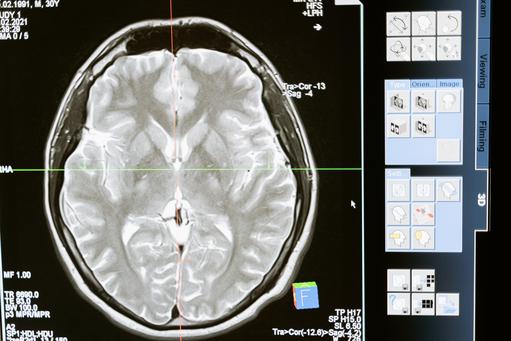
In January 2013 Andrew Marr, the 53-year-old BBC TV presenter and journalist, had a stroke after a bout of intensive exercise on a rowing machine in a gym. What is a stroke? A stroke is a serious medical emergency where the supply of blood to the brain is disrupted. In over 80% of cases, strokes usually happen because a blood clot blocks the blood supply to the brain. They can also happen when a weakened blood vessel that supplies the brain bursts and causes brain damage, known as a haemorrhagic stroke. Andrew Marr's stroke prompted two questions: (i) Do younger healthy people have strokes? and (ii) Does physical exercise contribute to strokes? Are stroke victims getting younger? Andrew Marr was one of 152,000 people in the UK who have strokes each year. Stroke is the third largest cause of death in the UK and the largest single cause of severe disability. There are approximately 1.1 million stroke survivors living in the UK and each year strokes cost the NHS £2.8 billion. The picture is no better in the US, where every 40 seconds a person has a stroke, each year strokes kill 130,000 and cost the US $38.6. Strokes are uncommon, but not rare in men in their fifties like Andrew Marr. Recent research suggests that strokes among the elderly are declining, while strokes among younger people are increasing. Between 1998 and 1999 in the UK, 9,000 people under 55 were admitted to hospital due to stroke. By 2011 this figure had risen to more than 1,600. It is not altogether clear why stroke is increasing among younger people, although experts note its correlation with type 2 diabetes. The importance of specialist stroke units Andrew Marr said that he believed what he read, that taking, "Very intensive exercise in short bursts is the way to health." Just before his stroke he said, "I went onto a rowing machine and gave it everything I had and had a strange feeling afterwards: a blinding headache and flashes of light". He took no notice and went home. The following morning he woke up lying on the floor unable to move. The most important care for people with any form of stroke is prompt admission to a specialist stroke unit, but even with prompt treatment a stroke can often be fatal. |
|
|
Directory:
Tags:
Keyoumars Ashkan underwent dual postgraduate training in surgery and medicine, obtaining Membership of the Royal College of Physicians (MRCP) in 1997 and the Fellowships of the Royal College of Surgeons of England and Glasgow (FRCS) in 1998. Thereafter, he underwent higher specialist training in general neurosurgery in London being awarded the Fellowship of the Royal College of Surgeons in Neurosurgery (FRCS SN) in 2002. His sub-specialist training in stereotactic and functional neurosurgery included a fellowship in France with Prof. Benabid, generally considered as the founder of the modern deep brain stimulation surgery, which led to a MD degree. He was appointed as a consultant neurosurgeon at King's College Hospital in January 2007. He is also a Reader at King’s College London.
In addition to his expertise in degenerative spine disease which includes the management of back and neck pain, arm pain and sciatica together with peripheral nerve disorders such as carpal tunnel syndrome; Mr Ashkan’s main interests are neuromodulation surgery and brain tumours. This includes deep brain stimulation, spinal cord stimulation and occipital nerve stimulation for movement disorders, pain and headaches and; image guided, minimally invasive and stereotactic surgery for brain tumours including awake craniotomies; Gamma and Cyberknife radiosurgery.
Directory:
Tags:
Keyoumars Ashkan underwent dual postgraduate training in surgery and medicine, obtaining Membership of the Royal College of Physicians (MRCP) in 1997 and the Fellowships of the Royal College of Surgeons of England and Glasgow (FRCS) in 1998. Thereafter, he underwent higher specialist training in general neurosurgery in London being awarded the Fellowship of the Royal College of Surgeons in Neurosurgery (FRCS SN) in 2002. His sub-specialist training in stereotactic and functional neurosurgery included a fellowship in France with Prof. Benabid, generally considered as the founder of the modern deep brain stimulation surgery, which led to a MD degree. He was appointed as a consultant neurosurgeon at King's College Hospital in January 2007. He is also a Reader at King’s College London.
In addition to his expertise in degenerative spine disease which includes the management of back and neck pain, arm pain and sciatica together with peripheral nerve disorders such as carpal tunnel syndrome; Mr Ashkan’s main interests are neuromodulation surgery and brain tumours. This includes deep brain stimulation, spinal cord stimulation and occipital nerve stimulation for movement disorders, pain and headaches and; image guided, minimally invasive and stereotactic surgery for brain tumours including awake craniotomies; Gamma and Cyberknife radiosurgery.

Directory:
Tags:
Back pain is very common, affecting most people at some time in their life. In most people it is short lived but in some the pain can last for longer periods of time. Most patients are able to manage their pain with painkillers. Other treatments that may be helpful include manipulation therapy such as physiotherapy, osteopathy or chiropractors. Acupuncture and TENS are sometimes useful. If these simple measures do not bring relief it is appropriate to consider surgical treatments. Your specialist will arrange an MRI to look for specific abnormalities which may be helped by surgery. If particular wear is seen within the facet joints then they may recommend an injection of steroid into the joints to help with your symptoms. If the discs appear to be the worn then they may recommend further investigations including discography to identify whether surgery such as spinal fusion may be of benefit.
Spinal fusion can be used to treat back pain associated with degenerative disc disease. If you have chronic back pain which has not responded to non-operative treatments then your specialist may discuss this with you. If only a single disc is worn on your MRI scan then removing that disc and fusing the spine may help with the pain. If multiple discs are affected then a procedure called discography may be used to help identify which disc is responsible for the pain.Spinal fusion for back pain improves the symptoms in between 50% to 90% of patients. When used to treat loosening or slippage of the vertebrae; (spondylolisthesis) fusing the spine has high success rates with 90% of patients noticing relief from their sciatic leg pains and over two thirds of patients noticing an improvement in their back pain.Various routes may be used to gain access to the affected area. Most commonly an incision is made in the middle of the lower back but sometimes an incision is made in the lower abdomen.Usually screws and rods are inserted to hold the vertebrae in position. Bone removed during the operation may be reinserted along with artificial bone in order to fuse the bones together. Sometimes the whole disc at the affected level is removed and small cages or spacers are inserted. Although most commonly used to treat conditions related to wear and tear (degenerative conditions) this procedure is also regularly used to treat fractures and tumours of the spine.The common risks of the procedure include infection and spinal fluid leakage. Major complications such as nerve injury and paralysis are very rare occurring in less than one in 200 cases.