

Dashboard
- All
-
Following
You must log in
before getting
tailored content. -
Interests
You must log in
before getting
tailored content. - Most liked
- Most viewed
E-Commentary
Sponsored

 10 months ago


 Facebook
 Twitter
 Google+
 LinkedIn

Directory:
Tags:
The scaffold age of tissue tech is ending. Incremental devices are giving way to intelligent ecosystems. In this episode of HealthPadTalks, we reveal how AI-guided regenerative platforms are transforming tissue innovation - and why MedTech’s future belongs to those who think in platforms, build on Real-World Evidence, and turn living biology into a data-driven discipline.

Dr Tom Manley
Fertility Specialist, Advanced Laparoscopic Surgeon, Obstetrician, GynaecologistDirectory:
Expertise:
Dr Tom Manley is a leading fertility specialist, gynaecological surgeon, and obstetrician offering continuous care from fertility treatment to birth. He completed advanced pelvic surgery training and a Master’s in Reproductive Medicine at the university of NSW. With rare expertise in fertility surgery, he specialises in endometriosis, fibroids, and ovarian cysts. Dr Manley practises at the Royal Women’s, Cabrini, Waverley Private Hospitals, and Create Fertility, supporting patients through every stage of their journey at this trusted fertility clinic in Melbourne.
view this profile

Clinica Aires
Dental Clinic in Santiago, ChileClínica Aires is a modern dental clinic in Providencia, Santiago, where advanced dentistry meets a calming, spa-like environment.
We specialize in endodontics, orthodontics, oral pathology, and aesthetic dentistry, offering personalized treatments that combine clinical precision with natural results. From your very first visit, you’ll notice the difference: warm attention, transparent communication, and a team that genuinely listens and guides you every step of the way.
Whether you’re seeking a smile makeover, treating a complex case, or simply need a dental check-up, our goal is always the same: to help you feel safe, comfortable, and confident—free from stress and with no unpleasant surprises.
Clínica Aires – Stress-free Dental Care in Santiago, Chile
www.clinicaaires.cl | @clinica.aires
view this profile

Boss Dental
Boss Dental - Best Dentist in CoimbatoreBoss Dental Clinic in RS Puram, Coimbatore, stands as one of the most trusted destinations for advanced, affordable, and comprehensive dental care. Known for its patient-first approach and modern technology, Boss Dental offers a complete range of treatments — from braces, clear aligners, and Invisalign to root canal therapy, dental implants, crowns, bridges, veneers, and smile designing. Every treatment is performed with precision, ensuring comfort, safety, and long-lasting results. Conveniently located near Gandhipuram, Saibaba Colony, and Race Course, Boss Dental Clinic is committed to delivering personalized dental care for all age groups in a welcoming and hygienic environment. With expert specialists, digital diagnostics, and pain-free techniques, the clinic ensures every patient enjoys a smooth, stress-free experience.
https://share.google/IVXZPH2nrDOQYCc8I
view this profile
Directory:
Tags:
|
|

|
|

|

Reflections Dental Care
Reflections Dental CareReflections Dental Care is your trusted provider of dental services in Oklahoma City, OK. Our experienced team of dentists in Oklahoma City offers a comprehensive range of treatments, including general dentistry, cosmetic dentistry, and restorative dentistry. We provide essential services, including dental implants, Invisalign, and professional teeth whitening, as well as specialized cosmetic options such as porcelain veneers. For those seeking a more comfortable experience, we also offer dental sedation. If you're looking for the best cosmetic dentist OKC has to offer, our team is dedicated to helping you achieve optimal oral health and a beautiful smile in a caring and supportive environment.
view this profile

Avni Samani
Hampden Dental & Aesthetics ClinicHampden Dental & Aesthetics Clinic is a long-established child-friendly practice and a private dentist in Southgate led by Dr Avni Samani.
The clinic is conveniently located in East Barnet’s Hampden Square, and easily accessible via car, bus and Southgate tube station. Our multi-discipline practice has steadily built on the firm foundations of our predecessors since the practice was first established over 60 years ago.
Our dedicated team of long-serving dental professionals and specialists are passionate about keeping ahead of the field when it comes to dentistry.
Whether it’s a routine check-up, tooth whitening, invisible braces such as Invisalign® or safe and effective facial aesthetics treatments like Fillers and Botox in Southgate, in East Barnet.
view this profile

Global Dentistry
Global Dentistry – Best Dentist in Perumbakkam | Leading Dental Clinic in PerumbakkamGlobal Dentistry is widely recognized as one of the best dentists in Perumbakkam, offering advanced and affordable dental treatments for patients of all ages. As a trusted dental clinic in Perumbakkam, we specialize in comprehensive oral care — from routine checkups to complex procedures — ensuring every patient receives gentle and personalized treatment.
Our experienced team provides a full range of services, including dental implants, root canal therapy, ceramic crowns, braces, Invisalign, pediatric dentistry, teeth whitening, cosmetic smile makeovers, dentures, scaling, and preventive dental care. We use state-of-the-art equipment and modern techniques to deliver pain-free, long-lasting results in a hygienic and comfortable environment.
view this profile

Cabinet Dentaire CDT
Cabinet Dentaire CDTCabinet dentaire CDT - Cabinet Dentaire La Tour à Bulle
Situé au cœur de La Tour-de-Trême, le Cabinet Dentaire La Tour (CDT) à Bulle propose des soins dentaires complets et personnalisés pour toute la famille. Notre équipe multilingue (français, anglais, allemand, roumain) associe expertise, technologies modernes et approche douce pour un accompagnement sur mesure, du simple contrôle préventif aux traitements esthétiques et orthodontiques complexes.
Phone :
+41 26 563 02 00
view this profile

Directory:
Tags:
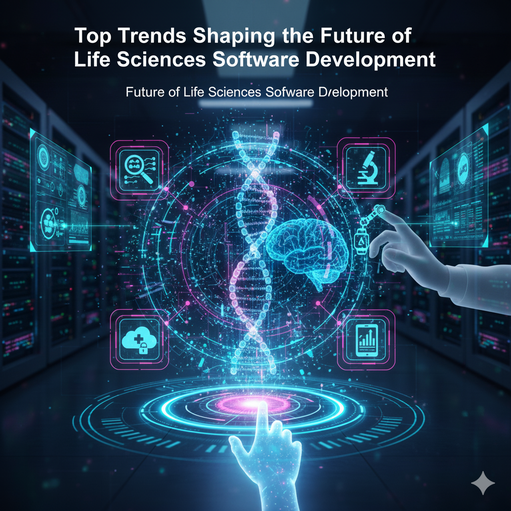
The life sciences industry is evolving at a rapid pace, driven by scientific breakthroughs, regulatory changes, and digital transformation. Software solutions now play a vital role in advancing research, improving patient outcomes, and streamlining operations. As technology continues to redefine healthcare and biotechnology, companies are investing heavily in software tools that enhance data management, automation, and compliance. Let’s explore the top trends shaping the future of life sciences software development and how they’re revolutionizing the industry.
1. The Rise of Artificial Intelligence and Machine Learning
Artificial Intelligence (AI) and Machine Learning (ML) are leading the transformation of the life sciences sector. These technologies enable researchers to analyze large volumes of data faster, identify patterns, and make predictive insights that were once impossible. From drug discovery to genomics, AI algorithms can process complex biological datasets, significantly reducing time and cost.
AI-powered software applications are also improving clinical trials by optimizing patient recruitment and monitoring. For example, ML models can predict patient responses to specific therapies, allowing for more targeted and effective treatments. As AI continues to mature, life sciences companies are increasingly integrating it into every stage of research and development.
2. Cloud Computing for Scalable Data Management
The explosion of scientific data requires scalable, secure, and efficient storage solutions. Cloud computing has emerged as the cornerstone of modern life sciences software development. It allows organizations to store, access, and analyze vast datasets without the limitations of traditional IT infrastructure.
Cloud platforms enable global collaboration by connecting researchers, pharmaceutical companies, and regulatory bodies on a single, secure network. Moreover, advanced encryption and access control ensure compliance with industry standards such as HIPAA and GDPR. As a result, cloud-based solutions are enhancing innovation while maintaining data integrity and security.
3. Data Integration and Interoperability
In life sciences, data often comes from multiple sources—clinical trials, genomics, laboratory systems, and electronic health records (EHRs). However, siloed data can slow down innovation and lead to inefficiencies. Modern software development focuses on data integration and interoperability, ensuring that all systems can communicate seamlessly.
With the adoption of standardized data formats and APIs, organizations can now merge and analyze complex datasets in real-time. This integration enables faster decision-making, better collaboration, and improved patient insights. As interoperability becomes the norm, it will pave the way for a more connected and transparent research ecosystem.
4. Advanced Analytics and Real-World Evidence (RWE)
Data analytics has become indispensable in life sciences, driving decisions from early-stage research to post-market surveillance. Advanced analytics tools are helping organizations make sense of vast amounts of real-world data (RWD) collected from wearables, EHRs, and clinical studies.
Real-World Evidence (RWE) derived from this data provides valuable insights into treatment effectiveness, patient behavior, and drug safety. Pharmaceutical companies can leverage RWE to accelerate regulatory approval and optimize clinical trial design. By combining predictive analytics with RWE, developers are creating smarter, data-driven software solutions that bridge the gap between research and real-world application.
5. Low-Code and No-Code Platforms Accelerating Innovation
The demand for faster software development cycles has given rise to low-code and no-code platforms. These tools allow scientists and non-technical users to design and deploy applications without extensive programming knowledge. In the life sciences domain, this trend empowers researchers to automate workflows, manage data pipelines, and create custom dashboards with minimal IT support.
Low-code development not only speeds up innovation but also reduces operational costs. It provides flexibility and agility, enabling teams to quickly adapt to regulatory changes and evolving research needs. As a result, these platforms are democratizing software development across the life sciences landscape.
6. Regulatory Compliance and Quality Management Automation
Compliance is a major concern in life sciences, given the strict regulations governing clinical trials, manufacturing, and patient data. To address this, companies are turning to automated quality management systems (QMS) and compliance software that track processes and maintain documentation in real time.
Modern QMS platforms integrate with laboratory and production systems, providing visibility and traceability across the entire product lifecycle. They help ensure that companies meet FDA, EMA, and ISO standards while minimizing human error. Automation not only simplifies compliance but also builds trust with regulators and stakeholders.
7. Cybersecurity and Data Privacy in Focus
As life sciences organizations handle sensitive health data, cybersecurity has become a top priority. The rise of digital transformation and cloud adoption increases the risk of data breaches, making robust security frameworks essential.
Developers are implementing advanced encryption, multi-factor authentication, and zero-trust architectures to protect data integrity. Additionally, AI-driven threat detection systems can identify and mitigate security risks proactively. By prioritizing cybersecurity, life sciences companies can safeguard patient information and maintain regulatory compliance.
8. Internet of Things (IoT) and Smart Devices in Research
The integration of the Internet of Things (IoT) in life sciences is transforming how data is collected and analyzed. Connected devices such as biosensors, wearables, and lab equipment continuously monitor biological parameters and transmit real-time data to software platforms.
This IoT-driven ecosystem supports precision medicine, remote monitoring, and efficient lab operations. For instance, IoT-enabled labs can automate experiments, track inventory, and improve reproducibility. As connectivity grows, IoT will play an increasingly important role in improving research accuracy and operational efficiency.
9. Blockchain for Data Integrity and Traceability
Blockchain technology is emerging as a game-changer for maintaining transparency and trust in life sciences. Its decentralized nature ensures that every transaction and data entry is secure, immutable, and verifiable. This is especially useful for clinical trials, supply chain management, and drug traceability.
By leveraging blockchain, organizations can prevent data tampering and ensure the authenticity of research results. It also enhances collaboration between stakeholders while maintaining strict data governance. As regulatory bodies begin to recognize its potential, blockchain adoption in life sciences software is expected to grow exponentially.
10. Personalized Medicine and Precision Software Solutions
The shift toward personalized medicine is reshaping how software is developed in the life sciences industry. Instead of one-size-fits-all solutions, software now focuses on analyzing individual patient data—such as genetics, lifestyle, and environment—to create tailored treatment plans.
Advanced bioinformatics tools and AI-driven algorithms are enabling this level of customization. These solutions not only improve patient outcomes but also accelerate drug discovery and reduce clinical trial costs. As personalized healthcare continues to evolve, software developers will play a crucial role in turning data into actionable insights.
Conclusion
The future of life sciences software development is being shaped by innovation, data, and connectivity. From AI and cloud computing to blockchain and IoT, technology is revolutionizing how life sciences organizations operate, innovate, and deliver value. By embracing these trends, companies can stay ahead in a competitive market while improving patient care and accelerating scientific discovery.
In an era where data is the new currency, the integration of smart, secure, and compliant software systems will be the key to unlocking the full potential of the life sciences industry.