

Directory
Sponsored

 joined 13 years, 1 month ago


 Facebook
 Twitter
 Google+
 LinkedIn

Robin Coupland
Medical Advisor to the ICRCRobin Coupland is a medical adviser in the International Committee of the Red Cross (ICRC).
He joined the ICRC in 1987 and worked as a field surgeon in Thailand, Cambodia, Pakistan, Afghanistan, Yemen, Angola, Somalia, Kenya and Sudan. He has developed a health-oriented approach to a variety of issues relating to violence and the design and use of weapons.
A graduate of the Cambridge University School of Clinical Medicine, UK, he trained as a surgeon at the Norfolk and Norwich Hospital and University College Hospital, London. He became a Fellow of the Royal College of Surgeons in 1985. He is the holder of a Graduate Diploma in International Law from the University of Melbourne in Australia.
As part of his current position he has focused on the effects of violence and weapons both conventional and non-conventional. He has developed a public health model of armed violence and its effects as a tool for policy-making, reporting and communication.
His current work has two tracks: first, the feasibility of an ICRC operational response in the event of use of nuclear, radiological, biological or chemical weapons; second, improving security of health care in armed conflicts. He has published medical textbooks about care of wounded people and many articles relating to the surgical management of war wounds, the effects of weapons and armed violence.
view this profile

Henry Dowlen
Surgeon LieutenantHenry works as a Doctor in Emergency Medicine, and as a National Lead for Health Informatics. He has served with the Royal Navy and Royal Marines, mainly concentrated in Afghanistan where he worked alongside the Afghan Government in assisting the reconstruction of community medical provision. He is currently a Deployable Civilian Expert for the UK's Stabilisation Unit and an officer in the Royal Marines Reserves.
view this profile

Alan Gelb
Senior Fellow, Center for Global DevelopmentDirectory:
Expertise:
Alan Gelb is a senior fellow at the Center for Global Development. His recent research includes aid and development outcomes, the transition from planned to market economies, the development applications of biometric ID technology, and the special development challenges of resource-rich countries. He was previously director of development policy at the World Bank and chief economist for the bank’s Africa region and staff director for the 1996 World Development Report “From Plan to Market.
view this profile

Mike Farrar
Independent management consultantDirectory:
Expertise:
Mike Farrar is an independent management consultant and former Chief Executive of the NHS Confederation. He joined the organisation in May 2011.
Mike was chief executive of the North West England SHA from May 2006 to April 2011. He was previously chief executive of West Yorkshire and South Yorkshire Strategic Health Authorities, chief executive of Tees Valley Health Authority and head of primary care at the Department of Health.
Mike was also a board member of Sport England, and in August 2009 was appointed as National Tsar for Sport and Health. Mike was also awarded the CBE in 2005 for services to the NHS and is an honorary fellow of the University of Central Lancashire.
view this profile

Michael Marmot
Professor of Epidemiology and Public Health at University College, London and Director of the UCL Institute of Health EquityDirectory:
Expertise:
Sir Michael Marmot is Professor of Epidemiology and Public Health at University College, London and Director of the Institute of Health Equity (UCL Department of Epidemiology & Public Health).
Professor Marmot has been awarded honorary doctorates from 14 universities and has led research groups on health inequalities for 40 years. He was Chair of the Commission on Social Determinants of Health (CSDH), which was set up by the World Health Organization in 2005, and produced the report entitled: ‘Closing the Gap in a Generation’ in August 2008.
At the request of the British Government, he conducted the Strategic Review of Health Inequalities in England, which published its report 'Fair Society, Healthy Lives' (aka The Marmot Review) in February 2010. This was followed by the European Review of Social Determinants of Health and the Health Divide, for WHO Europe in 2014. He chaired the Breast Screening Review for the NHS National Cancer Action Team and from 2011-2004 was a member of The Lancet-University of Oslo Commission on Global Governance for Health. He is currently Chair of the PAHO Commission on Equity and Health Inequalities in the Region of the Americas.
He set up the Whitehall II Studies of British Civil Servants, investigating explanations for the striking inverse social gradient in morbidity and mortality. He leads the English Longitudinal Study of Ageing (ELSA) and is engaged in several international research efforts on the social determinants of health. He served as President of the British Medical Association (BMA) in 2010-2011, and President of the World Medical Association (2015-16) and he is President of the British Lung Foundation. He is an Honorary Fellow of the American College of Epidemiology, a Fellow of the Academy of Medical Sciences, an Honorary Fellow of the British Academy, and an Honorary Fellow of the Faculty of Public Health of the Royal College of Physicians. He was a member of the Royal Commission on Environmental Pollution for six years and in 2000 he was knighted by Her Majesty The Queen, for services to epidemiology and the understanding of health inequalities.
Internationally acclaimed, Professor Marmot is a Foreign Associate Member of the Institute of Medicine (IOM), and a former Vice President of the Academia Europaea. He won the Balzan Prize for Epidemiology in 2004, gave the Harveian Oration in 2006, and won the William B. Graham Prize for Health Services Research in 2008.
view this profile
How do you develop a patient centred healthcare system that serves vast numbers of transient poor people? India has an answer: Rashtriya Swasthya Bima Yojna (RSBY), which has won plaudits from the World Bank and the United Nations as one of the world's best health insurance schemes.
RSBY combines state-of-the-art technology and incentive structures. It is paperless, does not use cash and provides affordable health insurance to millions of people. The overwhelming majority of who, are illiterate, transient people living below the poverty line.
RSBY employs cost effective, scalable technologies to help satisfy the health needs of a significant proportion of India’s poor. Enrolment of families into the scheme, biometric smart card generation, pre-authorization of admissions, as well as claim submission and approval, all occur electronically. Beneficiaries can use their smartcards in any empanelled hospital across India and therefore travel is no barrier to receiving healthcare. Patient data are transferred electronically between empanelled hospitals and insurance companies and claims are settled automatically. The scheme lowers costs, increases efficiency and reduces fraud.


|
|
|

|
|
|
Africa is sick. Ninety per cent of the world’s cholera cases occur in Africa. Meningococcal meningitis is epidemic in most African countries. Yellow fever is endemic in 23 African countries. Africa has more than 28 million HIV/AIDS cases and 75% of the world’s AIDS population live in sub-Saharan Africa. Of the one million annual malaria deaths, 90% occur in the same region. Measles are common throughout Africa and result in high levels of morbidity and mortality. Lassa fever accounts for about 0.4 million deaths each year and avian influenza is endemic in many African countries.
This is not the whole story. In addition to being plagued with infectious diseases, Africa has a neglected epidemic of chronic non-communicable disease (NCDs). Over the next decade the continent is projected to experience the largest increase in mortality rates from cardiovascular disease, cancer, respiratory disease and diabetes.
Although, international health agencies and national governments are beginning to recognize and confront the significant global burden of NCDs, its awareness in Africa is still relatively low and political leaders there have not shown much interest in NCDs and this has been reflected in the allocation of health budgets. This neglect compounds Africa’s healthcare and development challenges, since the projected rise in NCDs throughout the continent is expected to occur on a compressed timeline compared to high income countries and Africa has restricted capacity to respond to the magnitude of its disease burden.
International organisations have flagged the magnitude and the urgency of the challenge. Healthcare advice from numerous non government agencies in the developed world on ways to deal with Africa’s escalating disease burden is forthcoming. This has been especially the case over the past decade when humanitarian aid budgets have peaked. Agency recommendations have been high on overall strategy and low on cost effective and scalable means of delivering such strategy.
|
Most advice includes epidemiological surveillance, primary programmes that target healthy populations and secondary preventative programmes aimed at reducing complications in affected populations. All agencies agree that human resources are crucial to viable African health systems. Hitherto, human resources have been a neglected component of African healthcare. A common implementation strategy recommended and implemented by several non government agencies is to organise health workers from the developed world to spend time in African countries teaching the teachers. To assist such programmes, some agencies recommend that African governments build more roads to enable health workers to gain better access to rural areas where healthcare provision is poor or non-existent. Education is crucially important, but the key question is, how do you educate enough people to make a difference? Africa has a population of over one billion; about 15% of global population,but only 2% of global GDP and its population is projected to double by 2050. Africa is exposed to multiple health risks combined with inadequate preventative healthcare and education. Projected trends of Africa’s disease burden and consequent rates of morbidity and mortality highlight the inadequacy of some popular traditional response to Africa’s healthcare challenge. In addition to the enormity of its disease burden, Africa, which has weak health systems, also has significant long standing structural, logistic, human and organisational barriers to the implementation of well intended traditionalhealthcare programmes many of which focus on teaching the teachers. So, despite well intended traditional interventions, Africa’s disease burden continues to grow and its overall effect is likely to decrease productivity, lower competiveness, increase fiscal pressure, expand poverty and create greater inequity in most African countries. More scalable and effective solutions are required. These should build on Africa’s strength, which are her established and fast growing telecommunications networks and her relative absence of healthcare legacy systems. Current trends in disease prevalence and treatment costs will force African countries to make deliberate and innovative choices in order to address their disease burdens in sustainable and effective ways. Such choices are more likely to employ modern technology than to build more roads. In Africa, mobile penetration exceeds infrastructure development, including paved roads and access to electricity and the internet. According to the World Health Organization’s (WHO) Global Observatory for mHealth some 40 African countries are using mobile health services. |
|
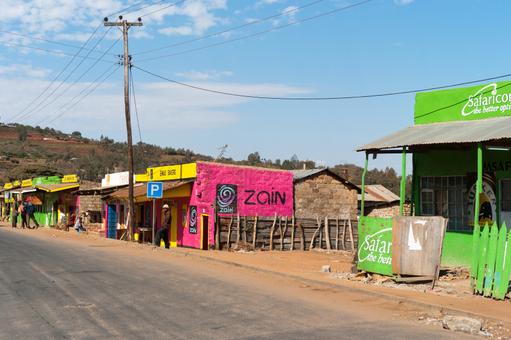
Africa is the fastest-growing mobile telephone market in the world and the biggest after Asia. Over the past five years the number of subscribers on the Continent has grown some 20% each year. By the end of 2012 it is projected that Africa will have 735 million mobile subscribers.The nature of Africa’s mobilemarket is also changing. Today, smart phone penetration rate in Africa is estimated to be about 18%: almost one in five and projected to reach 40% by 2015. While patchy, mobile penetration rates in Sub Saharan Africa, where the disease burden is greatest, are not low and the rate of smart phone penetration is estimated to be about 20%. In 2007 Sarafaricom, a leading mobile phone network in Kenya, launched M-Pesa, a mobile phone‐based payment and money transfer service for people too poor to have a bank account. M-Pesa spread quickly and has become the most successful mobile phone‐based financial service in the developing world. Today there are some 17 million registered M-Pesa accounts in Kenya. It is only a small step to offer a mobile health information service for all M-Pesa account holders. Africa’s new highways to carry healthcare information are virtual rather than physical. They already exist, they are extensive and, over the course of the next five years, are projected to rapidly expand and improve. With such an infrastructure one teacher can educate millions of people, which is significantly more cost effective and sustainable than traditional healthcare programmes. Further, Africa will not be able to diagnose and treat its way out of its disease burden. Increasingly, healthcare programmes will need to emphasis prevention, alongside efforts to strengthen health systems to provide early diagnosis; targeted cost-effective and scalable treatments that are fiscally sustainable depending on countries’ epidemiological profile. Such solutions will need to fit complex, overstretched and under-resourced health systems; address the enormity of the escalating disease burden and bring about desired changes in specific African countries’ health systems. This cannot be achieved only by repeating traditional healthcare programmes delivered by non government agencies from developed countries. According to the International Telecommunications Union there are some 5 billion wireless subscribers in the world today and over 70% of these reside in low and middle income countries. In 2011, Africa held its first mobile health summit in South Africa and firmly put mobile telephony at the centre of improving healthcare in poor countries. A 2011 WHO global survey of the use of mobile telephony in healthcare; mHealth, reported that commercial wireless signals cover over 85% of the world’s population. Eighty three per cent of the 122 countries surveyed in the Report used mobile phones for free emergency calls, text messaging and pill reminders. Modern technologies have the scalability to provide the basis for Africa to develop country-congruent health policies that are locally applicable. Technological systems such as mobile telephony, the internet and biometric identification, which are appropriately implemented, have the capacity to empower individuals and encourage them to take care of their own health. Further, such technologies have the capacity to improve targeting, reduce fraud and increase access to healthcare. Technologically based healthcare strategies offer Africa an opportunity to leapfrog its ineffective traditional healthcare systems and begin to manage the enormity of its disease burden and, in turn, may benefit the whole world by demonstrating the benefits of patient centred healthcare. |