Tag
Directory:
Tags:
|
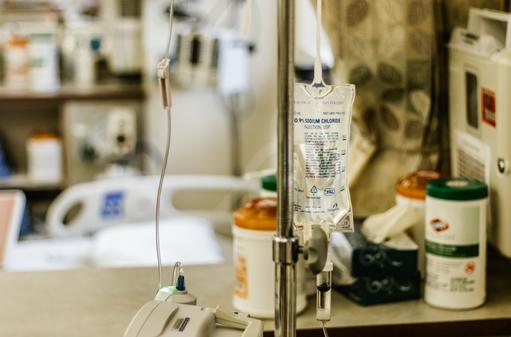
Improving the quality of healthcare usually means significant cost hikes. Acute kidney injury (AKI), however, which kills between 12,000 and 42,000 people in England each year, can be reduced at little cost, and could save the NHS between £434 million and £620 annually.
Severe dehydration is one of the main causes of AKI. Informing at risk patients of the importance of drinking water could reduce the incidence rate of AKI. |
|
|
|
|
|
Directory:
Tags:
|
Patients want health information in ways that doctors are not providing.
Patients want reliable answers to simple questions about the presentation, diagnosis, treatment options, side effects, and aftercare of their conditions. They want answers at speed, and increasingly delivered to their smartphones in video formats. With difficulties gaining face-time with doctors, patients turn to the Internet. Worldwide, some three billion health-related Internet searches are made each year. Patients experience difficulty finding reliable answers to their basic questions among more than two billion health websites. According to research published by the American National Institute of Health, 33% of adults who search the Internet for health information become confused by what they find. This frustrates their therapeutic journeys and makes for fraught doctor-patient relations. Things are changing, however, and now patients have a new free-and-easy-to-use online platform, www.healthpad.net. This provides patients with video answers to their FAQs that can be accessed at speed at anytime, from anywhere on any hand held device. |
|
|
|
|
|
|
Directory:
Tags:
|
Public smoking bans and eating fibre significantly reduces people attending hospitals for asthma. These are the conclusions of two 2014 studies: one reported in the Lancet and the other in Nature Medicine.
Asthma Asthma is the inflammation of the air passages in the lungs. It occurs when the immune system mistakes harmless triggers, such as dust mites as threats, which cause the airways to become inflamed, leading to symptoms such as wheezing and breathlessness. Worldwide the economic costs associated with asthma exceed that of TB and HIV/AIDS together. |
|
|
|
|
|
Directory:
Tags:
|
Cataract surgery, once only for elderly patients, is now increasingly being performed on younger baby boomers.
Facts More than half of the over-65s suffer from cataracts, which are cloudy patches in the lens that make vision blurred or misty. The condition is linked to smoking, poor diet or health conditions such as diabetes. Cataracts can affect your ability to read, write, watch TV, work at a computer, and drive. Severe cases can affect your ability to wash, dress, cook and work. According to the World Health Organization (WHO), 285 million people worldwide are visually impaired, 90% of these live in developing countries where cataracts are the leading cause of blindness. |
|
|
|
|
|
Directory:
Tags:
Are we addicted to foods that make us obese and kill?
Why is it hard for obese people to lose weight despite the social stigma and health consequences associated with being overweight? Is it similar to cigarette smokers who continue to smoke even though they know smoking will give them cancer and heart disease?
Is processed food the new tobacco?
Large growing global epidemic
Over the past 25 years the prevalence of obesity in England has more than doubled and today, most English people are either overweight or obese. Similarly, in the US more than a third of individuals are obese.
It’s estimated that each year, obesity costs the NHS more than £5bn and the US economy about $150bn.
Global epidemicOnce considered a problem only for rich countries, obesity is a rising worldwide challenge. In 1997 the World Health Organization (WHO) formally recognized obesity as a global epidemic and in 2008, claimed that 1.5 billion adults were obese.
Experts say a couch potato lifestyle and overindulgence in junk food is creating an overweight and obese generation prone to heart disease, diabetes and cancer. In rich countries people have easy access to cheap, high-energy food that is often aggressively marketed.
Call for parents and local authorities to help
The press refers to the “obesity time-bomb” and suggests that misguided parents are bringing up a generation of overweight children who gorge on junk food and sugary treats and rarely get any exercise. UK policy makers say that more should be done to support families to help them tackle the obesity crisis in children and young people.
In January 2014, Professor Philip James told the European Congress on Obesity in Antwerp: “Unless we can act firmly and decisively, we will be condemning a huge number of children . . . to becoming a ‘lost generation’.”
Where should we target our concerns? Parents? Municipal authorities? Or, the food and drinks industry?
Changed environment
Contrary to popular belief, people have not become greedier or less active, but what they eat has changed. Everyday, people are bombarded by food industry adverts to eat more food. New scientific evidence suggests that industrial processed food is biologically addictive.
The tobacco industry
In 1954, the tobacco industry paid to publish a “Frank Statement to Cigarette Smokers” in hundreds of US newspapers. It stated that the industry was concerned about peoples’ health and promised a number of good-faith changes.
What followed were decades of deceit and actions that cost millions of lives. During that time the tobacco industry emphasised personal responsibility and paid scientists to deliver research that triggered doubt and criticised science that found harm associated with smoking.
The food and drink industry
Similarly today, some large food and drink companies fund scientific research to establish health claims about their products.
A 2013 report suggests that scientific research sponsored by the food and drink industry is five times more likely to conclude that there are no links between consumption of sugary drinks and weight gain.
In March 2014, Dame Sally Davies, the UK’s Chief Medical Officer told a committee of MPs that, "research will find sugar is addictive" and that the government, “may need to introduce a sugar tax".
For years the tobacco industry made self-regulatory pledges, aggressively lobbied to stifle government actions and denied both the addictive nature of tobacco and their marketing to children.
Takeaways
Food and tobacco industries are different, but there are significant similarities in the actions they have taken in response to concerns that their products can harm.
Because obesity is now a pandemic the world cannot afford to make the same mistake it did with the tobacco industry.
Directory:
Tags:
|
Herniated disc surgery is the "bread and butter" for spine surgeons, but might not remain so. In the developed world, populations are rapidly aging, comorbidities are changing and the number of spine surgeons is shrinking.
Herniated disc A herniated or slipped disc is where one of the discs in the spine ruptures and the gel inside leaks (herniates) and causes back pain and sciatica. Once the nucleus herniates, pain in the lower back may improve, but sciatic leg pain increases. This is because the jelly-like material puts pressure on spinal nerves, which causes pain, numbness, or weakness in one or both legs. |
|
|
|
|
Directory:
Tags:
|
In October 2013 Professor Olaf Wendler, Clinical Director of Cardiology and Cardiothoracic Surgery at King's College Hospital London performed a new surgical heart procedure for the first time in the UK called less invasive ventricular enhancement or LIVE.
New procedures better for an aging population The path breaking operation uses a new device, developed by Bioventrix, Inc. that enables surgeons to effectively "exclude|" scarring. The procedure involves re-modelling the patient's left ventricle, which is the part of the heart responsible for pumping oxygen rich blood to the body, whist the heart is still beating. It's particularly suitable for elderly frail patients suffering from chronic heart disease and the benefits include small incisions, faster recovery and better outcomes. With traditional open-heart surgery the surgeon makes a ten to twelve-inch incision and then gains access to the heart by splitting the breast bone and spreading open the rib-cage. The patient is then placed on a heart-lung machine and the heart is stopped for a period. This approach, inappropriate for frail older patients with advanced heart disease, can be associated with postoperative infection, pain and a prolonged recovery time. |
|
|
|
|
|
A cheap spit-test that reveals the secrets of your genome, used by hundreds of thousands of people worldwide has been stopped by the FDA.
FDA warning letter On November 22nd 2013 the FDA sent a warning letter to 23andMe, a privately held personal genetic-testing firm based in Mountain View, California to, "immediately discontinue" providing its saliva collection kit and Personal Genome Service, because it had failed to provide adequate information to support the claims made in the company's marketing. 23andMe is so named because of the 23 pairs of chromosomes in a normal human cell. Founded in 2006, the Company is a Silicon Valley favourite led by Ann Wojcicki, wife of Sergey Brin, one of Google's founders. It has raised more than US$100 million from backers that include Google, Genentech and Yuri Milner, a billionaire investor in Facebook and Twitter. Taking more control of your health Nature took four billion years to develop the code that determines our life. The Human Genome Project, that ended a decade ago, initiated a medical revolution. In 2003 sequencing an individual genome cost between US$10 and US$50 million. Since then the costs have plummeted towards US$1,000, allowing science and medicine to identify genes with disease causing mutations. In 2008 23andMe's US$99 personal genome test kit was named by Time Magazine as the "invention of the year". |
|
|
|
Directory:
Tags:
|
In 2013, a new surgical procedure was used for first time in the UK at St George's Hospital, London to remove of a cancerous kidney tumour.
The procedure combines the da Vinci surgical system with an injection of a dye into the patient's kidney. The dye illuminates healthy tissue and shows up under the da Vinci's camera as a bright green light and as a consequence the procedure is called Firefly. Chris Anderson, a consultant urologist at St George's is one of the early adopters of robotic surgical techniques after receiving specialist training in 2005 at the world renowned Henry Ford Robotic Center in Detroit. Anderson has built-up a leading renal cancer unit at St George's and introduced the Firefly technology into the UK. He says, "Partial kidney removal is a complex operation that requires complete removal of the tumour and reconstruction of the remaining healthy kidney. By combining the da Vinci system with Firefly we are able to achieve our goal better than in the past". Robotic surgery Kidney surgery is enhanced by robotics. In recognition of the increasing importance of high tech surgical therapies, the N Sethia Foundation funded the UK's first robotic surgery training centre at University College Hospital, London. In pride of place in the new Chitra Sethia Centre for Robotics and Minimal Access Surgery is the latest da Vinci surgical system. |
|
|
|
|
Directory:
Tags:
|
In 2013 the Hollywood actress Angelina Jolie announced that she had both her breasts removed because she carried the BRCA1 gene.
Her bilateral prophylactic mastectomy highlights the fact that a woman whose mother or father carries a faulty BRCA1 gene has a 50% chance of also carrying it and a 60 to 80% higher risk of developing breast cancer. Angelina Jolie exemplifies what many women with a family history of breast cancer are doing: testing for the BRCA1 gene; if positive, electing for a bilateral prophylactic mastectomy and after surgery, reconstructing their breasts. Hollywood myths do women a disservice In a New York Times article, entitled My Medical Choice, Jolie informed women about BRCA gene mutations and the challenges of breast surgery. Her efforts are overshadowed by the notion that breast surgery is quick and easy. Hollywood images propagate the myth that reconstructive surgery quickly restores breast symmetry, improves body image, quality of life, self confidence and wellbeing. In reality, it's major surgery with significant risks that entails an extended series of operations and follow-up visits and can take three to nine months to recover from. |
|
|
|
|